
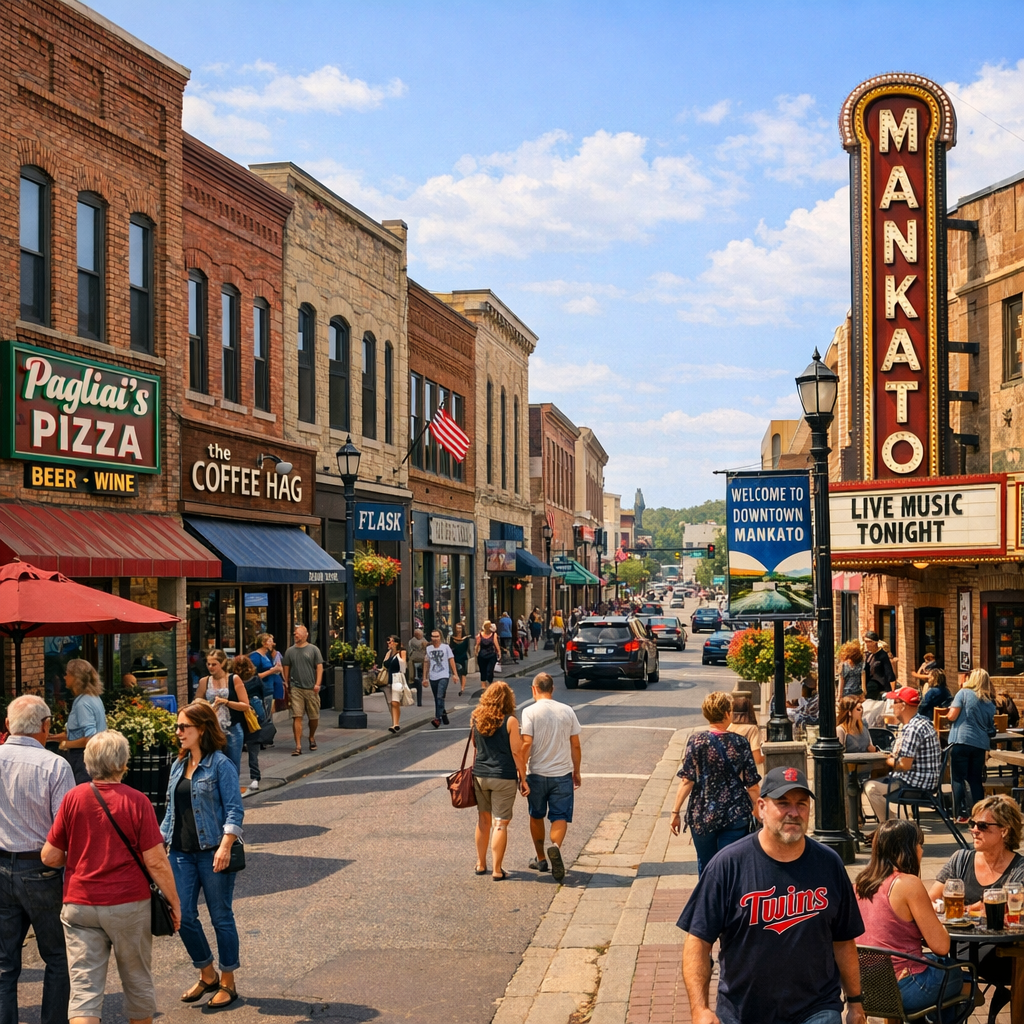
Mankato, Minnesota, has experienced significant economic growth over the past decade, solidifying its position as a regional hub for retail, manufacturing, healthcare, education, and trade. This article explores the current state of Mankato’s economy, highlighting key developments, challenges, and opportunities for local businesses and entrepreneurs.
Population Growth and Economic Expansion
As of 2026, Mankato’s population is projected to reach 47,370, reflecting a steady annual growth rate of approximately 0.97%. This consistent increase underscores the city’s appeal and its capacity to attract residents and businesses alike.
The Mankato-North Mankato Metropolitan Statistical Area (MSA) has outpaced many of its regional counterparts, with a 6.2% population growth between 2012 and 2022. This growth rate surpasses the combined average of 32 MSAs in the Upper Midwest by 3.46%, highlighting Mankato’s economic vitality.
Retail and Business Development
Mankato serves as the primary retail center for south-central Minnesota and northern Iowa, catering to a trade area population of approximately 340,700. Retail development is concentrated along major corridors such as Riverfront Drive and Madison Avenue, offering a diverse range of shopping experiences.
Local businesses continue to thrive and expand. For instance, Seoul Foods, a popular grocery store specializing in Asian products, is relocating to a larger space in North Mankato’s Bridge Plaza. This move will nearly double the store’s size, allowing for a deli and a broader selection of ethnic groceries, meeting the growing demand for diverse food options in the region.
Infrastructure and Urban Development
Infrastructure improvements are pivotal to Mankato’s economic growth. The city has undertaken significant projects, including the demolition of the century-old Landmark Center as part of a $93 million downtown revitalization effort. This initiative aims to attract more convention business and stimulate further economic activity in the area.
Challenges and Collaborative Efforts
Despite the positive trajectory, Mankato faces challenges such as addressing rumors and misinformation that can impact business decisions. City leaders emphasize the importance of regional collaboration and open communication between Mankato and neighboring North Mankato. Joint efforts focus on shared systems like the school district, water treatment, and public transportation, ensuring cohesive development and resource management.
Conclusion
Mankato’s economic landscape is characterized by robust growth, strategic development, and a collaborative spirit. As the city continues to evolve, local businesses and entrepreneurs have ample opportunities to contribute to and benefit from this dynamic environment. Staying informed and engaged with community initiatives will be key to navigating the challenges and seizing the opportunities that lie ahead.